If you’re planning to sell products online, you’ve probably come across Etsy and Shopify. Both are popular eCommerce platforms, but they serve very different purposes. Choosing the right one can have a significant impact on your sales, branding, marketing strategy, and long-term business growth.
Etsy is an online marketplace where millions of buyers actively search for handmade products, vintage items, craft supplies, and personalized gifts. It allows sellers to open a shop quickly and start selling without building their own website. Since Etsy already has a large customer base, it’s an attractive option for beginners who want immediate exposure.
Shopify, on the other hand, is an eCommerce platform that lets you build your own online store. Unlike Etsy, Shopify doesn’t provide a marketplace where customers browse products. Instead, it gives you complete control over your website, branding, pricing, and customer experience. You’re responsible for driving traffic through SEO, social media, email marketing, and paid advertising.
Neither platform is universally better. Etsy is ideal for creators who want access to an existing marketplace, while Shopify is better suited for businesses that want to build an independent brand and scale over time.
In this comparison, we’ll compare Etsy and Shopify across fees, ease of use, customization, marketing, SEO, product management, payment processing, customer support, scalability, and overall value to help you decide which platform best fits your business.
Etsy vs Shopify: Quick Comparison
| Feature | Etsy | Shopify |
|---|---|---|
| Best For | Handmade products, vintage items, craft supplies | Building an independent online store |
| Setup Difficulty | Very Easy | Easy |
| Marketplace Traffic | Yes | No |
| Website Ownership | No | Yes |
| Branding Control | Limited | Complete |
| SEO | Moderate | Excellent |
| Customization | Limited | Outstanding |
| Marketing Tools | Basic | Advanced |
| Scalability | Good | Excellent |
| Overall Rating | 4.6/5 | 4.8/5 |
Quick Recommendation
Choose Etsy if you want to:
- Start selling quickly
- Reach existing buyers
- Sell handmade or personalized products
- Avoid building a website
- Test a business with low upfront costs
Choose Shopify if you want to:
- Build your own brand
- Own your customer relationships
- Customize your website
- Scale your business
- Sell across multiple channels
Etsy vs Shopify: What Is the Difference?
Although both platforms help people sell products online, they work in completely different ways.
Etsy is an online marketplace. Your products appear alongside millions of other listings, and customers visit Etsy looking for handmade, vintage, and creative products. Etsy brings the traffic, while sellers compete within the marketplace for visibility.
Shopify isn’t a marketplace. Instead, it’s a website builder designed specifically for eCommerce businesses. It allows sellers to create their own branded online store with a custom domain, personalized design, and complete control over how products are displayed and sold.
Another major difference is ownership.
On Etsy, your business operates within Etsy’s ecosystem. Etsy controls the marketplace, search algorithm, policies, and customer experience. If Etsy changes its rules or fees, every seller is affected.
With Shopify, you own your online store. You choose the design, install apps, create marketing campaigns, collect customer data, and decide how your business grows.
This difference also affects marketing.
Etsy sellers benefit from built-in marketplace traffic, while Shopify merchants must actively attract visitors through search engines, social media, email marketing, or paid advertising.
Winner
For beginners looking for immediate visibility, Etsy has a clear advantage.
For businesses focused on long-term growth and brand ownership, Shopify is the stronger choice.
Winner: etsy
Etsy vs Shopify: Ease of Getting Started
One of the biggest considerations for new sellers is how quickly they can launch their business.
Getting Started with Etsy
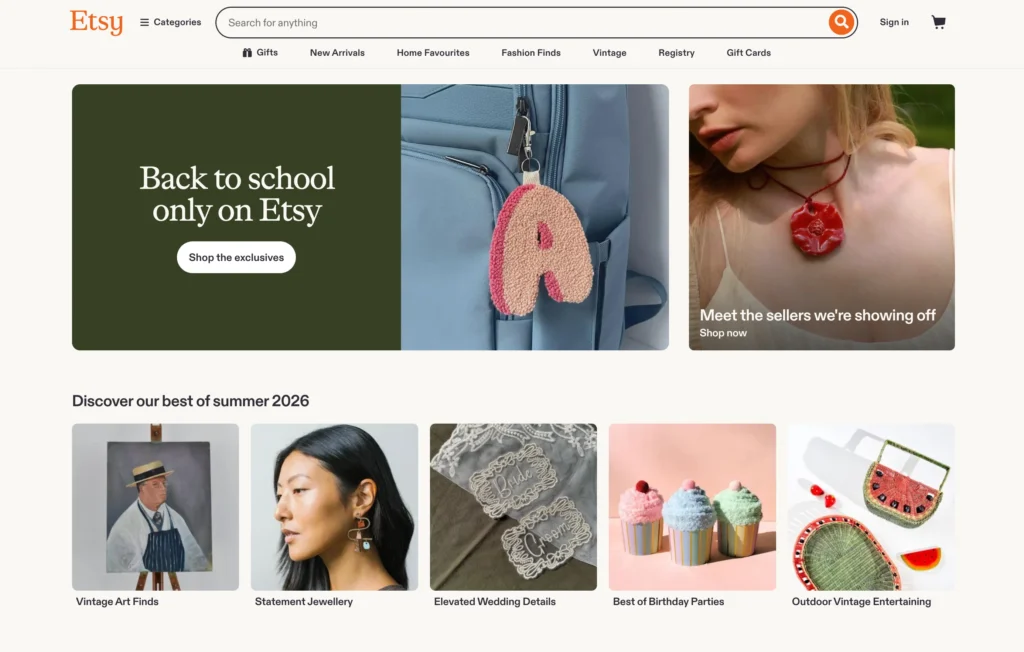
Opening an Etsy shop takes only a few minutes.
After creating an account, sellers can:
- Name their shop
- Upload product photos
- Add descriptions
- Set prices
- Configure shipping
- Publish listings
No technical knowledge is required.
Since Etsy already provides hosting, checkout, and payment processing, sellers can focus entirely on creating products.
This makes Etsy one of the easiest marketplaces for first-time entrepreneurs.
Getting Started with Shopify

Shopify requires more initial setup.
Sellers need to:
- Choose a theme
- Configure the store
- Connect a custom domain
- Add payment gateways
- Set shipping rules
- Organize collections
- Customize navigation
Although Shopify provides an intuitive setup wizard, launching a professional online store usually takes more time than opening an Etsy shop.
The additional setup is worthwhile because it provides much greater flexibility later.
Winner
For simplicity and speed, Etsy wins comfortably.
Winner: Etsy
Etsy vs Shopify: Product Types and Selling Flexibility
The types of products you plan to sell can determine which platform is a better fit.
Selling on Etsy
Etsy specializes in:
- Handmade products
- Personalized gifts
- Vintage items (20 years or older)
- Craft supplies
- Digital downloads
Products that don’t fit these categories may not be allowed or may struggle to perform well.
This specialization helps Etsy maintain a consistent marketplace focused on creativity.
Selling on Shopify
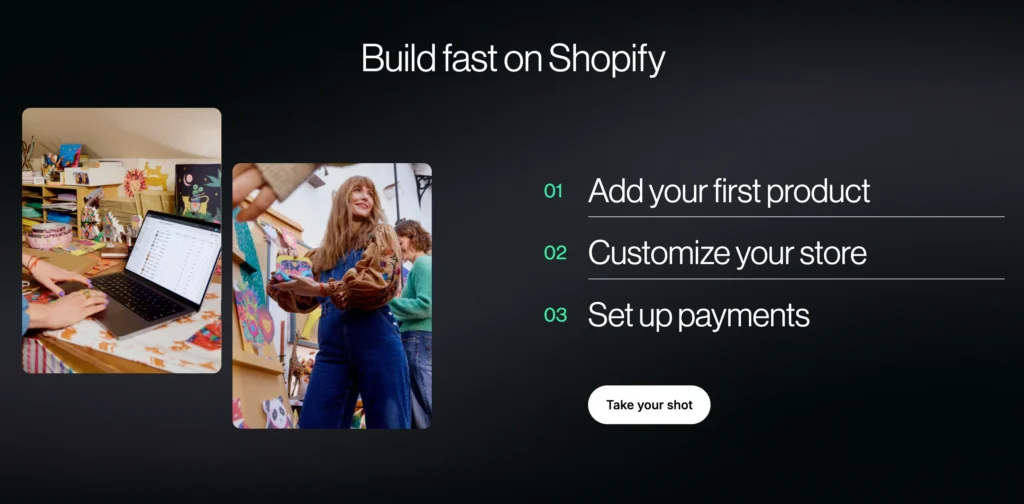
Shopify supports almost every type of product, including:
- Clothing
- Electronics
- Beauty products
- Food and beverages
- Digital products
- Furniture
- Subscription products
- Print-on-demand items
- Wholesale catalogs
Because Shopify is your own store, you’re not restricted to a particular niche.
This flexibility allows businesses to expand into new product categories as they grow.
Winner
If you only sell handmade or personalized products, Etsy is an excellent choice.
For businesses that want complete freedom over what they sell, Shopify is the clear winner.
Etsy vs Shopify: Pricing and Selling Fees
Understanding the cost of selling is essential before choosing a platform.
Etsy Fees
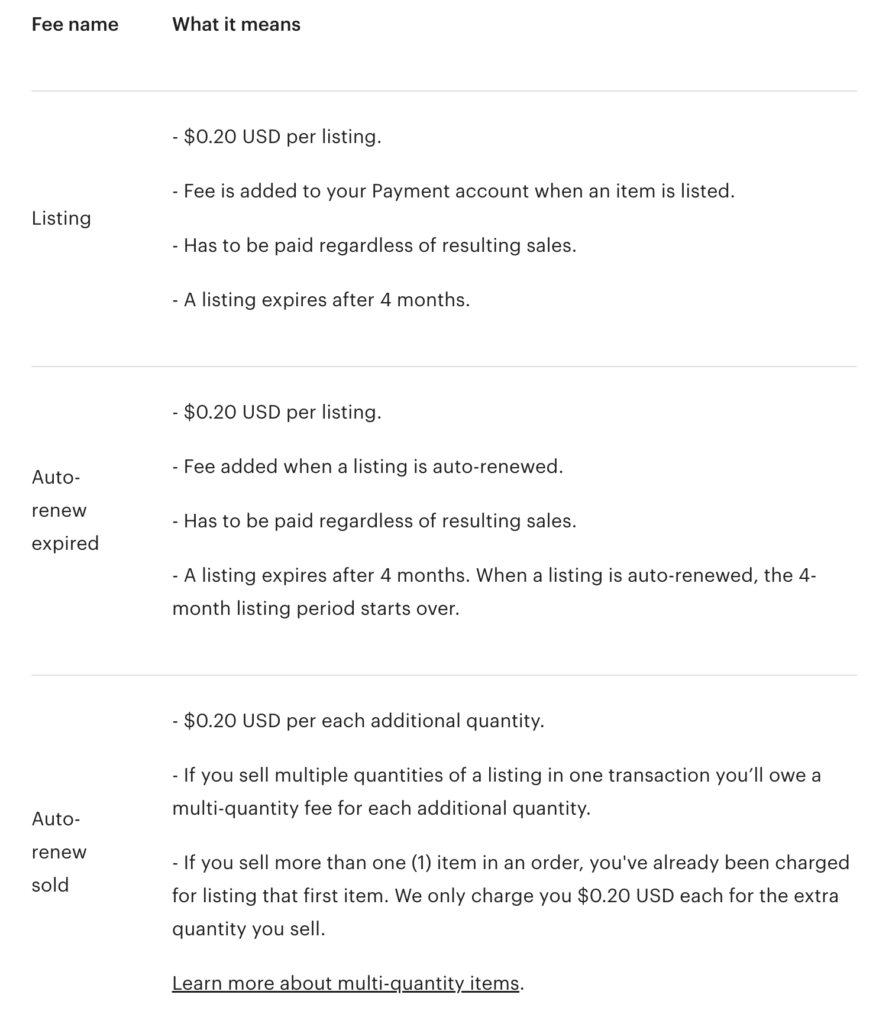
Etsy charges several different fees, including:
- Listing fee for each product
- Transaction fee on every sale
- Payment processing fee
- Optional advertising fees through Etsy Ads and Offsite Ads
These costs can add up, especially for sellers with a large inventory or high sales volume.
The advantage is that there is no monthly subscription required to start selling.
This makes Etsy an affordable option for small businesses and hobby sellers.
Shopify Pricing
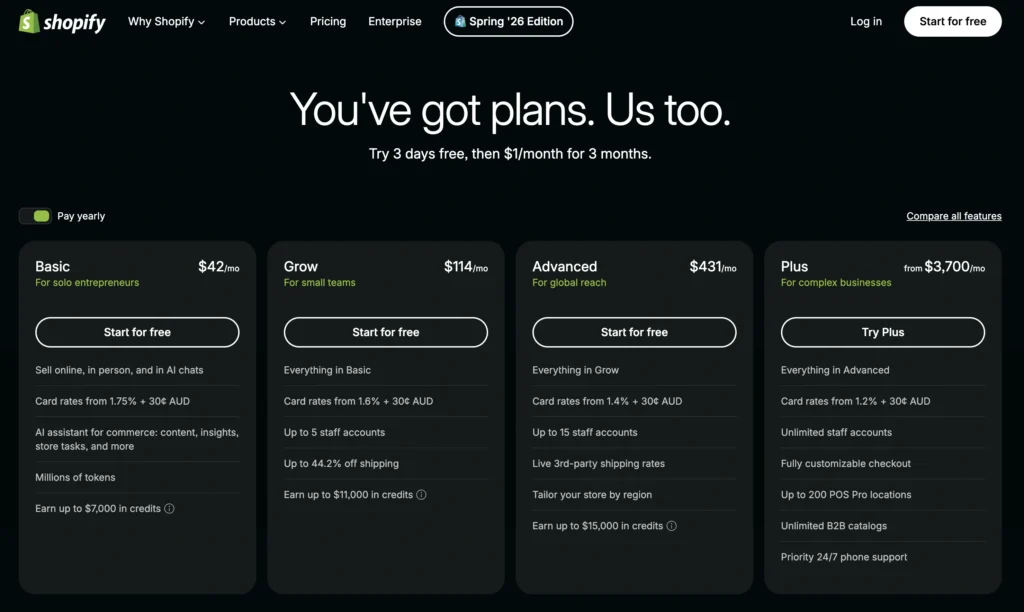
Shopify works on a subscription model.
Monthly plans include features such as:
- Website hosting
- Secure checkout
- Inventory management
- Analytics
- Marketing tools
- Unlimited product listings
In addition to the monthly subscription, payment processing fees may apply depending on the payment gateway you choose.
Although Shopify has a higher upfront cost than Etsy, sellers with growing businesses often find it more cost-effective because they avoid marketplace listing fees on every product.
Winner
For sellers with only a few products or limited sales, Etsy is usually cheaper.
For established businesses with higher revenue, Shopify often provides better long-term value.
Winner: Tie
Etsy vs Shopify: Website Design and Branding
Brand identity plays a major role in building customer trust and encouraging repeat purchases.
Etsy Branding
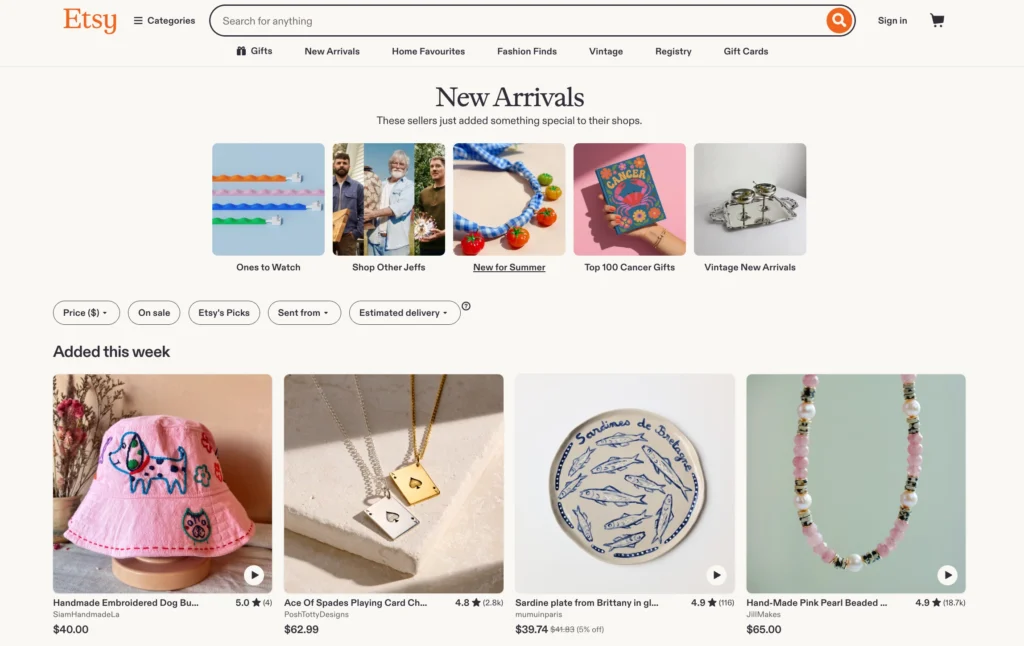
Every Etsy shop follows the same marketplace layout.
Sellers can customize:
- Shop logo
- Banner
- Product photos
- Shop description
- Policies
However, the overall design remains controlled by Etsy.
Customers generally remember they’re shopping on Etsy rather than with an individual brand.
Shopify Branding
Shopify gives merchants complete creative control.
You can customize:
- Homepage layout
- Navigation
- Fonts
- Colors
- Product pages
- Checkout experience (depending on plan)
- Blog
- Custom domain
Thousands of themes and apps allow businesses to create a store that reflects their brand identity.
This level of customization is especially valuable for businesses planning to grow beyond marketplace selling.
Winner
When it comes to branding, design flexibility, and creating a memorable customer experience, Shopify is significantly stronger.
Etsy vs Shopify: Marketing and SEO
Generating traffic is essential for increasing sales, but the way Etsy and Shopify approach marketing is very different.
Etsy Marketing
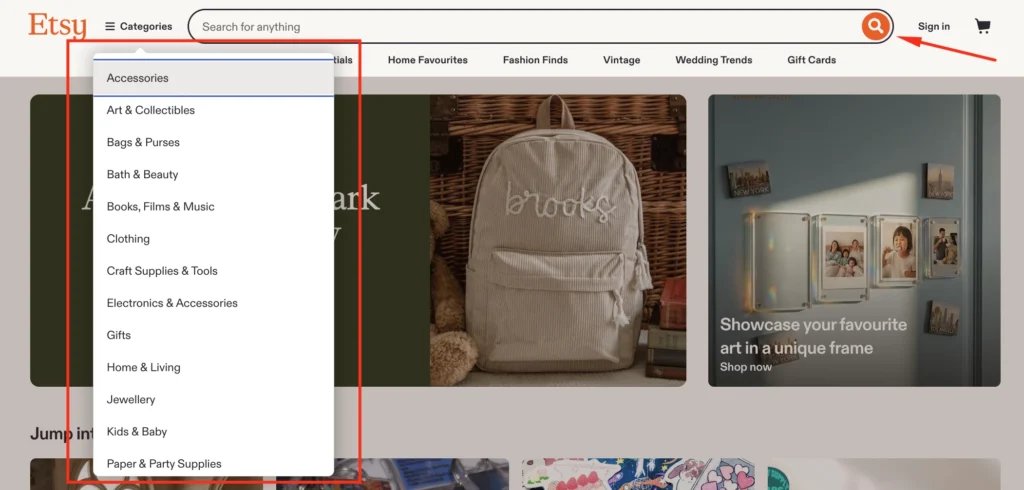
Etsy brings millions of shoppers to its marketplace every month.
Sellers can benefit from:
- Etsy Search
- Category pages
- Featured listings
- Etsy Ads
- Offsite Ads
While this built-in traffic is valuable, sellers have limited control over how products rank. Visibility depends on Etsy’s search algorithm, listing quality, reviews, pricing, and competition.
Shopify Marketing
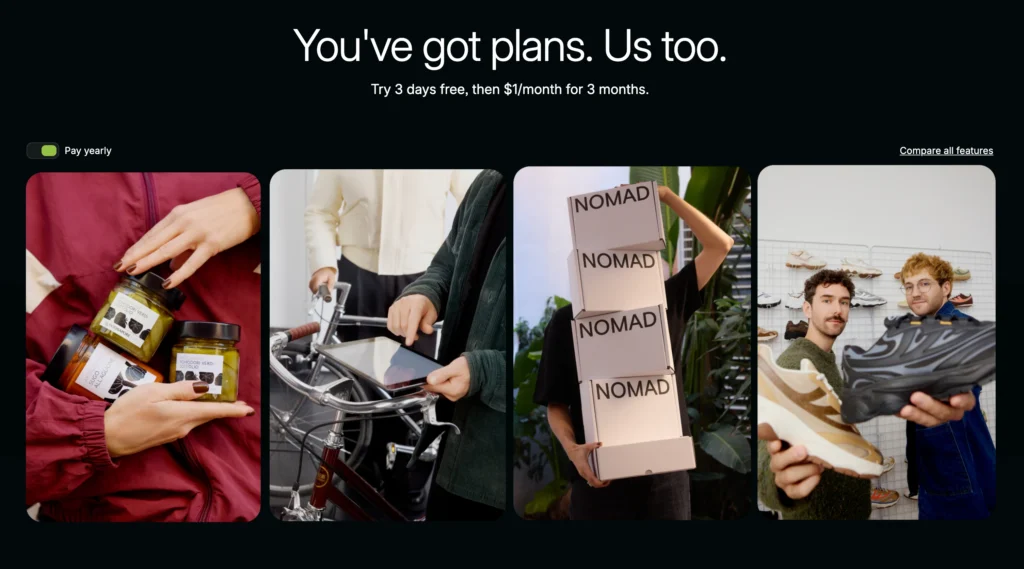
Shopify gives businesses complete control over their marketing strategy.
Merchants can use:
- SEO optimization
- Content marketing
- Email campaigns
- Social media
- Google Ads
- Meta Ads
- Influencer marketing
- Affiliate marketing
Unlike Etsy, success depends on your ability to attract visitors to your store. The advantage is that you’re building traffic for your own brand rather than relying on a marketplace.
Winner
Etsy is better for sellers who want immediate marketplace exposure with minimal marketing effort.
Shopify is the stronger choice for businesses focused on long-term SEO, customer acquisition, and brand growth.
Etsy vs Shopify: Inventory Management and Order Management
As your business grows, managing products, orders, and inventory becomes increasingly important. This is an area where Etsy and Shopify differ significantly.
Etsy Inventory Management
Etsy provides basic inventory management tools that work well for small businesses.
Sellers can:
- Add product variations such as size or color
- Track available stock
- Update listings individually
- Manage open orders
- Print shipping labels
- Send tracking information
For sellers with a limited product catalog, these features are usually enough.
However, businesses with hundreds or thousands of products may find Etsy’s inventory management less efficient since it lacks many advanced automation features available on dedicated eCommerce platforms.
Shopify Inventory Management
Shopify is designed to handle businesses of every size, from small startups to large online retailers.
Its inventory tools allow merchants to:
- Track stock across multiple locations
- Manage product variants
- Receive low-stock alerts
- Process bulk product edits
- Generate inventory reports
- Sync inventory across sales channels
- Integrate with warehouse management systems
Shopify also supports thousands of third-party apps that automate inventory updates, fulfillment, and shipping.
These capabilities make it much easier to manage large product catalogs.
Winner
For small handmade shops, Etsy’s inventory tools are sufficient.
For businesses planning to scale, Shopify offers far more advanced inventory management.
Winner: Shopify
Etsy vs Shopify: Payment Processing
A reliable payment system helps create a smooth shopping experience for customers while ensuring sellers receive payments securely.
Etsy Payments
Etsy Payments handles transactions on behalf of sellers.
Customers can pay using:
- Credit and debit cards
- Apple Pay
- Google Pay
- Etsy Gift Cards
- PayPal (where available)
- Klarna installment payments in eligible countries
The setup process is simple because Etsy manages the payment infrastructure.
However, sellers have limited flexibility over how payments are processed.
Shopify Payments
Shopify allows merchants to choose how they want to accept payments.
Popular options include:
- Shopify Payments
- PayPal
- Stripe
- Authorize.Net
- Amazon Pay
- Apple Pay
- Google Pay
- Shop Pay
- Hundreds of regional payment gateways
This flexibility is especially useful for businesses selling internationally or serving customers with different payment preferences.
Winner
Shopify provides greater flexibility and supports a wider range of payment gateways.
Winner: Shopify
Etsy vs Shopify: Sales Channels and Business Growth
Where your products are sold can have a major impact on your revenue.
Selling Through Etsy
Etsy products are primarily sold within the Etsy marketplace.
Although sellers can promote listings on social media or through external advertising, most sales come directly from Etsy’s existing customer base.
This built-in traffic is one of Etsy’s biggest advantages, especially for new sellers.
The downside is that your business remains dependent on Etsy’s search algorithm and marketplace policies.
Selling Through Shopify
Shopify allows merchants to sell through multiple channels from a single dashboard.
Depending on your business, you can connect your store with:
- TikTok
- Google Shopping
- YouTube
- Amazon
- eBay
- POS systems for physical stores
Orders, inventory, and customer data can all be managed in one place.
This multichannel approach helps businesses reach customers wherever they prefer to shop while maintaining a consistent brand experience.
Winner
For sellers who want to expand beyond a single marketplace, Shopify is the clear winner.
Etsy vs Shopify: Customer Support
Good customer support is important when running an online business, especially if technical issues or payment problems occur.
Etsy Customer Support
Etsy provides support through:
- Help Center
- Email support
- Live chat (availability varies)
- Community forums
Most shop-related questions are answered through articles and FAQs, while more complex issues can be escalated to Etsy’s support team.
Because Etsy manages the marketplace, sellers have limited control when disputes or policy violations occur.
Shopify Customer Support
Shopify is known for providing comprehensive support for merchants.
Support options include:
- 24/7 live chat
- Email support
- Phone support (in supported regions)
- Extensive documentation
- Video tutorials
- Community forums
- Shopify Academy
The platform also has a large ecosystem of experts and developers who can assist with store customization and technical issues.
Winner
etsy offers more comprehensive and business-focused customer support.
Etsy vs Shopify: Scalability
Many sellers start with a few products, but choosing a platform that can grow with your business is important.
Growing with Etsy
Etsy works well for:
- Hobby sellers
- Side businesses
- Small handmade brands
- Creative entrepreneurs
However, as sales increase, sellers may encounter limitations such as:
- Greater marketplace competition
- Limited branding
- Dependence on Etsy’s search algorithm
- Marketplace policy changes
These factors can make long-term scaling more challenging.
Growing with Shopify
Shopify is designed for businesses that want to scale.
As your store grows, you can:
- Upgrade to higher plans
- Add staff accounts
- Install advanced apps
- Expand internationally
- Sell wholesale
- Launch subscription products
- Integrate fulfillment services
- Automate marketing
Many well-known global brands use Shopify because it supports businesses at every stage of growth.
Etsy vs Shopify: Pros and Cons
Etsy Pros
- Quick and easy to start selling.
- Built-in marketplace with millions of active buyers.
- Excellent for handmade, vintage, and personalized products.
- Low upfront investment.
- No website management required.
Etsy Cons
- Limited branding and customization.
- Marketplace competition is high.
- Listing and transaction fees can add up.
- Dependent on Etsy’s search algorithm.
- Limited control over customer relationships.
Shopify Pros
- Complete ownership of your online store.
- Professional branding and customization.
- Powerful SEO and marketing tools.
- Excellent inventory and order management.
- Supports multichannel selling.
- Highly scalable for growing businesses.
Shopify Cons
- Monthly subscription cost.
- Requires marketing to generate traffic.
- Longer setup process than Etsy.
- More responsibility for managing your website.
Who Should Choose Etsy?
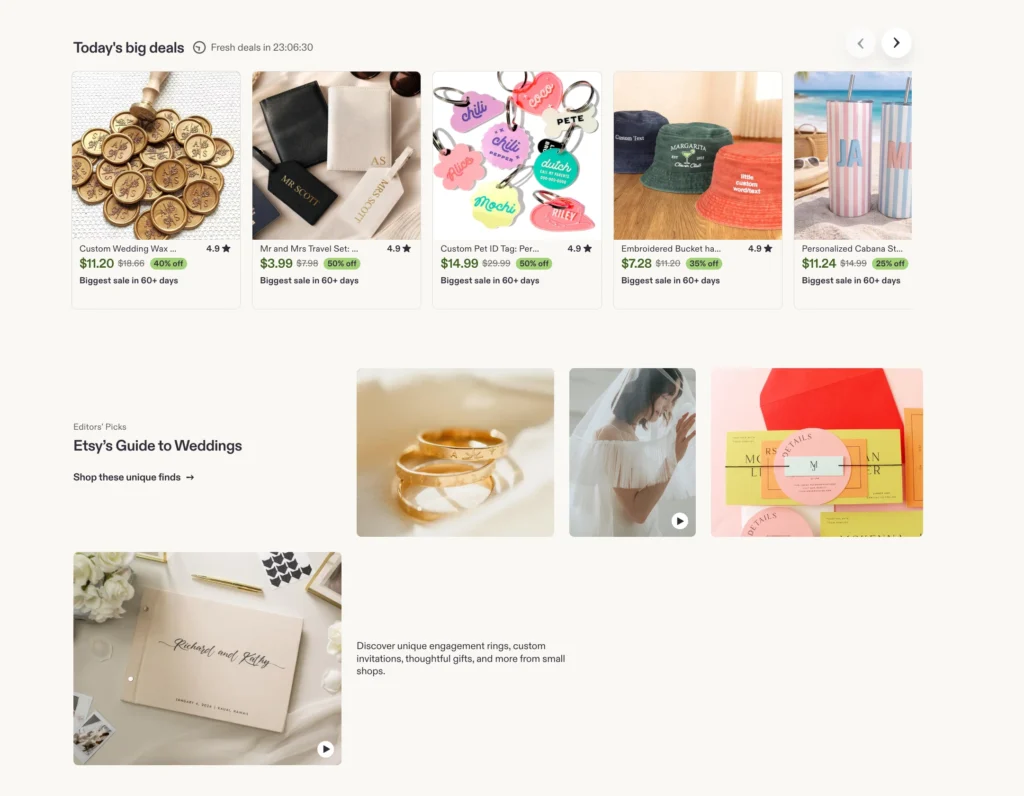
Etsy is the better choice if you:
- Sell handmade products.
- Create personalized gifts.
- Offer vintage items.
- Want immediate access to an existing customer base.
- Have limited technical experience.
- Prefer a low-cost way to start selling online.
- Run a small creative business.
- Don’t want to manage your own website.
Who Should Choose Shopify?
Shopify is ideal if you:
- Want to build a long-term brand.
- Need complete control over your website.
- Plan to scale your business.
- Sell products across multiple channels.
- Invest in SEO and digital marketing.
- Want advanced inventory management.
- Need powerful analytics and reporting.
- Intend to build a loyal customer base outside a marketplace.
Final Verdict: Etsy vs Shopify
Etsy and Shopify are both excellent platforms, but they solve different problems for online sellers.
Etsy is one of the easiest ways to start selling online. Its built-in marketplace gives new businesses instant access to millions of shoppers searching for handmade, personalized, and vintage products. You don’t need technical knowledge, a separate website, or a marketing strategy to make your first sale. For hobbyists, artists, and small creative businesses, Etsy offers a simple and affordable way to reach customers.
Shopify, however, is built for entrepreneurs who want to create an independent brand. It provides complete control over your store, branding, customer experience, and marketing. Although it requires more effort to attract visitors, every marketing activity strengthens your own business rather than a third-party marketplace. As your business grows, Shopify’s advanced tools, integrations, and scalability make it a better long-term investment.
Many successful businesses actually use both platforms together. They start on Etsy to gain exposure and validate their products, then launch a Shopify store to build their own brand while continuing to use Etsy as an additional sales channel. This hybrid approach allows sellers to benefit from Etsy’s marketplace traffic while developing a business they fully own.
Ultimately, your decision depends on your goals. If you want the quickest path to selling handmade products, Etsy is an excellent starting point. If your goal is to build a scalable eCommerce business with complete control over your brand, Shopify is the stronger platform.
Overall Ratings
| Category | Etsy | Shopify |
|---|---|---|
| Ease of Setup | ⭐⭐⭐⭐⭐ | ⭐⭐⭐⭐☆ |
| Product Flexibility | ⭐⭐⭐⭐☆ | ⭐⭐⭐⭐⭐ |
| Pricing & Fees | ⭐⭐⭐⭐☆ | ⭐⭐⭐⭐☆ |
| Branding | ⭐⭐⭐☆☆ | ⭐⭐⭐⭐⭐ |
| Marketing & SEO | ⭐⭐⭐⭐☆ | ⭐⭐⭐⭐⭐ |
| Inventory Management | ⭐⭐⭐☆☆ | ⭐⭐⭐⭐⭐ |
| Payment Flexibility | ⭐⭐⭐⭐☆ | ⭐⭐⭐⭐⭐ |
| Scalability | ⭐⭐⭐⭐☆ | ⭐⭐⭐⭐⭐ |
| Customer Support | ⭐⭐⭐⭐☆ | ⭐⭐⭐⭐⭐ |
| Overall Rating | 4.6/5 | 4.8/5 |
Frequently Asked Questions
Is Etsy better than Shopify for beginners?
Yes. Etsy is generally better for beginners because you can set up a shop quickly and start selling to an existing audience without building your own website.
Can I use Etsy and Shopify together?
Yes. Many businesses use Etsy to attract marketplace buyers while operating a Shopify store as their primary branded website. This strategy helps diversify sales channels and reduce dependence on a single platform.
Which platform is cheaper?
For small sellers with only a few products, Etsy usually has lower upfront costs. For businesses with consistent sales and long-term growth plans, Shopify often provides better overall value despite its monthly subscription.
Which platform is better for SEO?
Shopify is the better choice for SEO because you have full control over your website, content, URLs, metadata, and blogging. Etsy listings can rank in search engines, but your optimization options are more limited.
Do I own my customers on Etsy?
Not entirely. While you can communicate with buyers, Etsy controls the marketplace and customer experience. With Shopify, you own your customer data and can build long-term relationships through email marketing, loyalty programs, and other channels.
Which platform should I choose?
Choose Etsy if you want to start selling handmade, vintage, or personalized products quickly with access to an existing marketplace. Choose Shopify if your goal is to build a scalable eCommerce brand with complete control over your store, marketing, and customer experience.